The Poison Pill
Key Takeaways
- The Big Shift: How Agentic AI is changing the game.
- Actionable Insight: Immediate steps to secure your AI Privacy.
- Future Proof: Why Local LLMs are the ultimate privacy shield.
The War Has Changed
For years, it was a one-way street. AI companies scraped the internet. They took every JPEG, every PNG, every sketch.
"It's fair use," they said. "It's just learning," they said.
Artists screamed into the void.
But now? The void is screaming back.
Join the Vibe Coder Resistance
Get the "Agentic AI Starter Kit" and weekly anti-hype patterns delivered to your inbox.
Join the Vibe Coder Resistance
Get the "Agentic AI Starter Kit" and weekly anti-hype patterns delivered to your inbox.
Join the Vibe Coder Resistance
Get the "Agentic AI Starter Kit" and weekly anti-hype patterns delivered to your inbox.
Enter Nightshade
Nightshade isn't a copyright watermark. It doesn't ask politely.
It modifies the pixels of an image in a way the human eye can't see, but a machine learning model finds catastrophic.
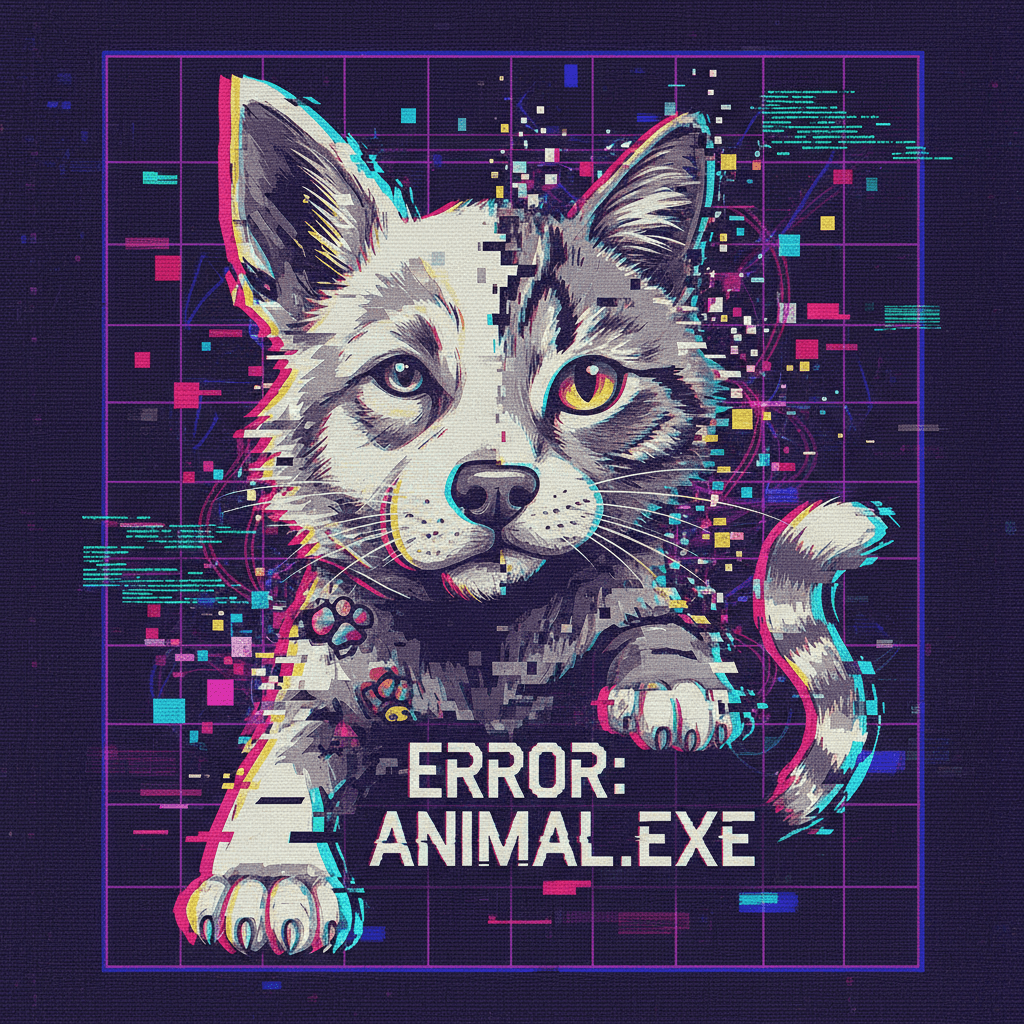
- You see: A cute dog.
- The AI sees: A toaster.
When the AI trains on thousands of these "poisoned" images, its brain breaks. You ask for a dog, it gives you a toaster.
It destroys the model from the inside out.
Glaze (Defense)
Nightshade (Offense)
The "Cat and Mouse" Game
This is an arms race.
- Artists release Nightshade.
- OpenAI/Midjourney develop "filters" to detect poisoned images.
- Researchers release "LightShed" to bypass the filters.
- Repeat.
But here is the scary part (or the awesome part, depending on your side):
Training a model costs millions. Poisoning it costs nothing.
The asymmetry of warfare favors the guerillas.
INPUT_IMAGE
"A Blue Ball"
AI_INTERPRETATION
"A Red Cube"
STATUS: MODEL_CONVERGENCE_FAILED. LOSS_FUNCTION_INFINITE.
YOUR_MONTHLY_RENT
*Click items to cancel them.
COST OVER 5 YEARS
IF INVESTED (S&P 500)
$400 one-time
TYPE THIS PROMPT:
Conclusion: The Ethics of Sabotage
Is it ethical to break a billion-dollar machine? Is it ethical for that machine to steal your life's work?
Nightshade forces the industry to the negotiating table.
It turns "Opt-Out" from a polite request into a survival necessity for AI companies.
If they don't ask for permission, they risk drinking the poison.
Build Your Own Agentic AI?
Don't get left behind in the 2025 AI revolution. Join 15,000+ developers getting weekly code patterns.